Core Mechanics
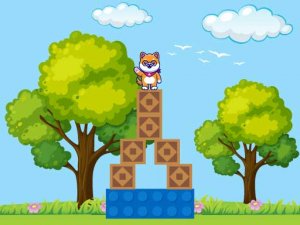
Chain Reaction Capers centers on launching characters to topple structures. Players drag to set an angle and release to apply force. Each launch sends a character flying into blocks, crates, and other objects. The physics engine calculates collisions in real time, causing objects to tumble, slide, and stack. Success depends on reading the layout and choosing the right trajectory. A single well-placed hit can set off a cascade that clears the entire level. The game rewards careful observation and thoughtful planning over speed.
Level Design Approach
Levels are built around distinct spatial puzzles. Early stages introduce simple stacks of blocks with clear weak points. Later stages add moving platforms, fragile barriers, and objects that swing or roll. Each level feels like a small mechanical problem waiting to be solved. The game avoids repetitive layouts by mixing vertical and horizontal arrangements. Some levels require precise aim to hit a single trigger block, while others demand a broader strategy to destabilize a large structure. This variety keeps the gameplay fresh without overwhelming the player.
Visual and Audio Style
The game uses bright, clean graphics with a playful cartoon aesthetic. Characters are round and friendly, and structures are built from colorful blocks. When a character hits a structure, objects break apart with satisfying pops and clatters. The sound effects are light and bouncy, never harsh or alarming. Background music is cheerful and unobtrusive. The overall presentation creates a relaxed atmosphere that suits the puzzle genre. Nothing in the visuals or audio suggests intensity or danger, making it suitable for younger players.
Progression and Challenge
Difficulty increases gradually as players advance. New obstacles appear one at a time, giving players room to adapt. The game does not penalize failed attempts, encouraging experimentation. Each level can be replayed to find more efficient solutions. There are no timers or score multipliers that force rushed play. Instead, the challenge comes from understanding the physics and finding the right angle. This design makes the game accessible to casual players while still offering depth for those who enjoy optimizing their approach.
Family-Friendly Design Choices
The game avoids any depiction of harm or conflict. Characters are never shown in distress, and structures collapse without any violent imagery. The focus stays on the puzzle itself: how to make objects fall in a satisfying sequence. Parents can let children play without concern. The controls are simple enough for young children to grasp, yet the puzzles require enough thought to engage older players and adults. This broad appeal makes it a good choice for family game time.



Comments
0 comments